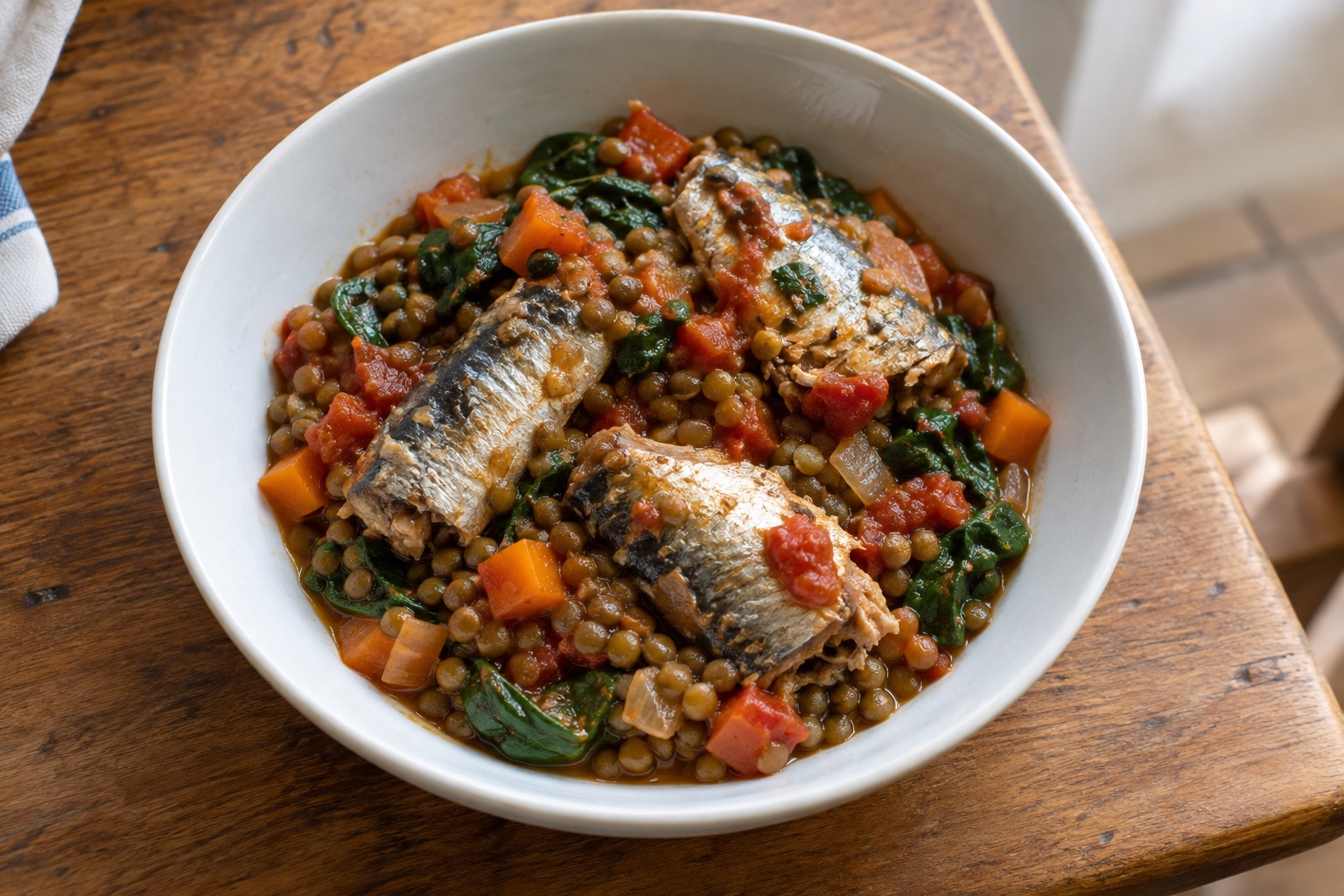
Sardines with lentils and spinach
Built around lower-GI carbohydrate choices; this finished recipe has not been GI-tested. Portion size and cooking method still matter.
Ingredients:
- Tinned sardines (400 g)
- Green lentils (500 g)
- Carrots (300 g)
- Spinach (150 g)
- Onion (100 g)
- Garlic (10 g)
- Tinned tomatoes (400 g)
- Water (200 ml)
- Olive oil (20 ml)
- Ground cumin (2 g)
- Lemon juice (30 ml)
- Salt and pepper
Method:
A complete supper, with pulses on the plate
Serves 4. Allow 40 minutes. The pulses are weighed fully cooked and drained. They supply the carbohydrate part of the meal; the fish or chicken is not assigned a GI score.
Start the vegetable base
Peel and chop the onion and garlic. Wash and cut the firm vegetables into 1 cm pieces, keeping leaves separate. Heat the oil in a wide, deep pan. Cook the onion and firm vegetables for 8 minutes, stirring, then add garlic and the listed seasoning for 30 seconds. Add tomatoes, water and pulses and simmer for 10 minutes.
Cook the main ingredient
Drain the tinned sardines and keep them in large pieces. Once the sauce and vegetables are tender, lay the sardines on top and warm gently for 3–4 minutes. They are already cooked, so vigorous stirring or a long simmer will only break them up. Small soft canned bones can be eaten; remove any you prefer not to eat.
Finish and serve
Fold the leafy vegetables into the sauce during its final 5 minutes of cooking, adding a splash of water if it thickens too much. Finish with lemon juice, salt and pepper. Divide both the pulses and the main ingredient evenly between four plates. There is already a carbohydrate portion here, so consider any rice or bread separately. The finished meal has not been GI-tested.
Buy thoughtfully
Use seasonal vegetables where practical and buy only the quantities you need. For this seafood recipe, check the species, origin and fishing or farming method against the current Marine Conservation Society Good Fish Guide. Choose a suitable well-rated source; an MSC label can help identify certified wild fisheries. No species or recipe is automatically sustainable. Frozen or tinned fish can be useful for matching portions and reducing waste.